Sponsorship Has Always Evolved
Sponsorship is so woven into community sport that it’s easy to assume it has always looked the way it does now. A local business backs a club. Their logo goes on a jersey, a sign, a programme, or a pitchside hoarding. The club gets funding, the sponsor gets seen.
But sponsorship in the GAA and in community sport more widely has never stood still.
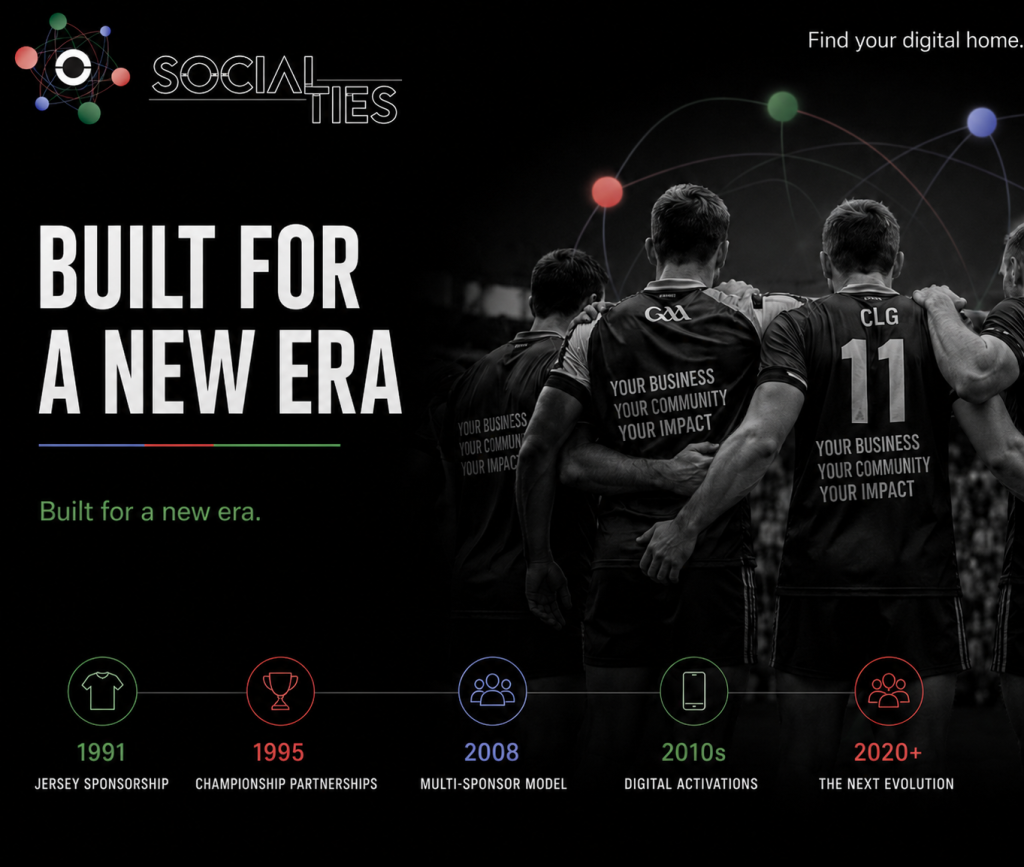
In 1991, the GAA approved jersey sponsorship for county teams, opening the door to a new era of commercial partnership. In 1995, Guinness began its sponsorship of the All-Ireland Senior Hurling Championship, and championship backing became central to how the games were funded and promoted. By 2008, the GAA had moved from a single championship sponsor to a multi-sponsor model, recognising that partnerships were getting more sophisticated. More recently, sponsorship has shifted again, towards digital campaigns and community activations. The point was no longer just to be seen. It was to be part of things.
The lesson is simple: every generation of community sport has adapted its sponsorship model to match how people connect, communicate, and take part.
The question is whether local organisations have kept pace.
A Sponsorship Model Frozen in Time
While sponsorship itself has moved on, many clubs and community organisations are still selling packages that would have looked familiar thirty years ago.
The standard offer usually includes a pitchside sign, a logo on a jersey, an advert in a programme, event sponsorship, and the occasional social media mention.
None of this is without value. These assets still matter, and they always will. But they were designed for a different era. In 1995, a sponsor’s goal was largely visibility. If thousands of people saw a business name every week, that was strong value. Today, local businesses operate in a very different landscape.
What Sponsors Expect Today
Modern businesses spend their marketing budgets across a lot of options, and they increasingly expect every one of them to do more than put a name in front of people. They want connection. They want to feel part of the audience they are backing, not just visible to it.
So the questions a sponsor asks have changed. Not only “how many people will see us?” but “how will this connect us to the community?” and “what will this partnership feel like beyond match day?”
Community sponsorship is no longer competing only with other sponsorship opportunities. It is competing with every marketing option a business owner has. That does not mean community sponsorship is losing relevance. It means organisations need better ways to show the value they already create.
The untapped value inside community organisations
Community organisations generate something most brands can only envy. Trust.
A local club or community group has deeper relationships with its members than almost any business could build on its own. People volunteer, families stay involved for years, supporters turn up week after week. Businesses sponsor clubs precisely because they want to be associated with those relationships.
The challenge is that most of this value stays invisible. A sponsor can back a club for years and never really see, or feel part of, the impact of that support.
Visibility is no longer enough
When jersey sponsorship arrived in 1991, visibility was the whole point. A logo on a county jersey reached thousands of people, and that was revolutionary. Today, visibility on its own is rarely enough. People want to interact, take part, and feel connected.
The strongest sponsorships now create regular opportunities for businesses and communities to engage with each other, rather than simply sharing space on a hoarding or a jersey.
This does not replace traditional sponsorship. It strengthens it.
The future of sponsorship is community participation
The best sponsorships have always been about more than money, and modern tools make it possible to deepen those relationships rather than leave them to match day alone.
Instead of a sponsor being seen only on the big day, they can be part of community life across the season. Instead of occasional exposure, the focus shifts to ongoing connection. Instead of hoping people notice them, businesses can build a genuine relationship with the community they support.
The organisations that thrive over the next decade will be the ones that turn those relationships into something continuous and visible for everyone involved, sponsor and supporter alike.
The next evolution
Looking back, sponsorship has always adapted to its time.
1991 brought jersey sponsorship.
1995 brought championship partnerships.
2008 brought the multi-sponsor model.
The 2010s brought digital activations.
The next step is already taking shape. It is a model where sponsorship is part of the community’s everyday life rather than a set of isolated advertising assets. Where businesses, members, volunteers, and supporters are connected through the same place. And where more of the value created locally stays local.
Where SocialTies fits in
At SocialTies, we believe community sponsorship deserves the same step change that has reshaped it at every stage of its history.
Community organisations create real value every day through participation, volunteering, events, local pride, and connection. Too often that value is hard to show a sponsor, and hard to turn into steady support.
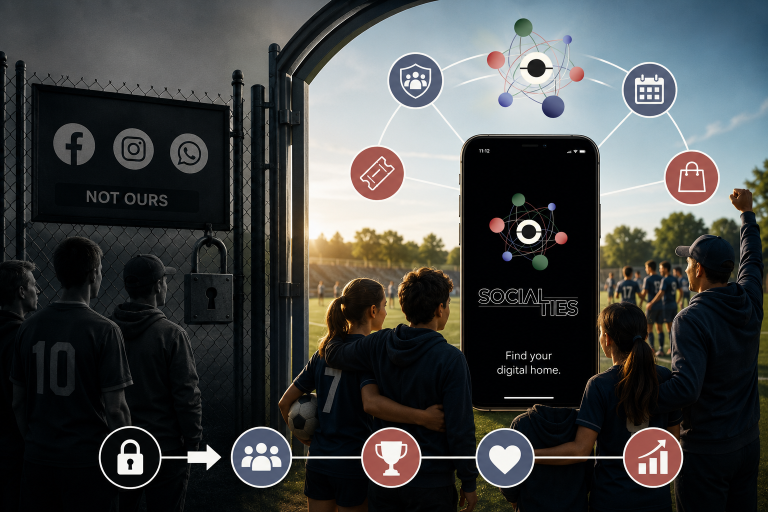
SocialTies helps close that gap. By bringing communication, content, community engagement, and local business partnership into one branded home the community controls, we give sponsors and organisations new ways to support each other across the whole year, not just on match day.
For sponsors, that means a real, ongoing relationship with a local audience rather than a logo on a sign. For organisations, it means partnerships that are easier to build and easier to show. For volunteers, it means less admin and stronger commercial backing. And because the platform is funded by hyperlocal advertising under our Community Shared Advertising model, half of that revenue is reinvested straight back into the community. The money local businesses put in keeps working locally all year round.
The sponsorship model built for 1995 helped generations of clubs grow. But every era needs its own tools. Just as sponsorship evolved in 1991, again in 2008, and again through digital engagement, the next chapter is about building stronger, more connected communities, with the infrastructure to match. That is the future SocialTies is helping to build.
Get started
Communities are strongest when they have the tools, connections, and support to thrive. If your organisation is looking for a better way to engage members, strengthen participation, and build lasting local connections, get in touch with SocialTies and see what community-owned digital infrastructure looks like in practice.